Agile Transformation: Redesigning Team Structures

In today’s fast-paced business environment, many companies face significant challenges when relying on traditional siloed hierarchical team structures to execute strategic projects and operational tasks. These challenges often include communication barriers, lack of agility, and difficulties aligning team efforts with broader organizational goals. As a result, modern companies are shifting towards more dynamic and integrated approaches, such as aligning teams on Objectives and Key Results (OKRs) and designing “teams of teams” that leverage cross-functional agile teams. This transformation helps organizations deliver value more effectively and efficiently.
Challenges of Siloed Structures
-
Poor Communication: Teams working in silos may struggle to communicate effectively, leading to misunderstandings and misaligned priorities.
-
Lack of Agility: Siloed structures are rigid and slow to adapt, which makes it harder for organizations to respond quickly to market shifts or new opportunities.
-
Misaligned Goals: Without a cohesive strategy, teams might pursue individual objectives that do not align with the company’s broader goals, leading to inefficiencies and wasted resources.
-
Top-Down Decision Making: Traditional structures rely on top leaders to make most decisions, slowing down team productivity.
-
Unresolved Obstacles: Siloed teams often face challenges with no clear owners responsible for resolving them. Instead, they rely on traditional project managers who send emails and move between departments to find solutions.
-
Slow Delivery: Too many dependencies, waiting for decisions, approvals, or delayed funding slow down project delivery.
“Organizations that don’t enable Enterprise Agility now will be the dinosaurs of tomorrow” – Sally Elatta
To overcome these challenges, modern companies are adopting new operating models that emphasize collaboration, agility, and alignment. A key component of this transformation is the use of OKRs, ensuring that all teams work towards common objectives. Additionally, the concept of “teams of teams” is employed to create a more flexible and responsive organizational structure.
Visualizing the Operating Model
Imagine this operating model:
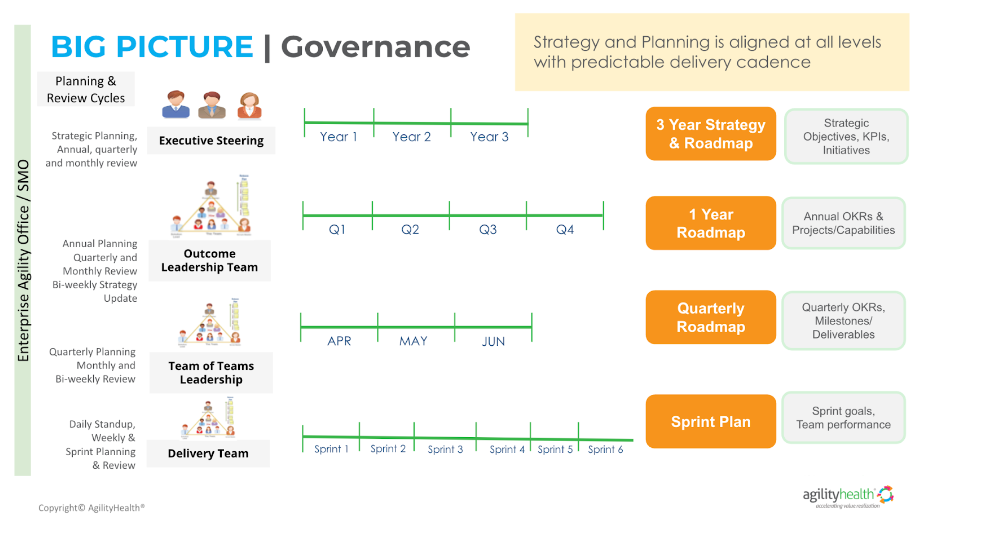
- Delivery Teams: At the base, cross-functional agile teams are composed of members with diverse skills and expertise. These teams are dedicated to delivering specific projects or products. They plan on a regular cadence (usually every 2 weeks), meet daily, track progress, and improve sprint over sprint. These teams are creative, innovative, and deliver great results when empowered.
- Team of Teams: Above the delivery teams, a “team of teams” layer provides guidance, support, and coordination. This group ensures that all sub-teams are aligned and working toward shared outcomes. They plan one quarter ahead to ensure that work meets the definition of ‘ready.’ They attend team reviews, give feedback, and make sure everyone stays on track.
- Outcome Leadership Team: This layer ensures that desired outcomes are being achieved. They make trade-off decisions, prioritize investments, manage budgets, and monitor progress. They also remove obstacles and provide resources to ensure teams are successful.
- Executive Steering Team: At the top, the executive steering team oversees the entire structure, builds vision, ensures financials are managed, creates the right culture, and makes high-level decisions to facilitate smooth operations.
New to Business Agility? Watch this explainer video:
Best Practices for Cross-Functional Agile Team Design
- Team Size: Maintain a team size of 7 ± 2 members to foster effective collaboration and communication.
- Role Allocation: Ensure all necessary roles are filled, with core members dedicated to the team and a few experts from other areas allocated as needed.
- Priority Setting: Cross-functional team members should receive priorities from the product owner rather than their direct managers, avoiding conflicts.
- Capacity Management: Avoid spreading team members too thin by managing their allocation across multiple teams.
- Clear Roles and Expectations: Define specific roles and responsibilities to ensure clarity and accountability.
- Team Charter: Create a team charter that includes norms, working agreements, and skill walls. Ensure clarity on meetings and work management tools.
- Agile Training: Provide training on agile methodologies, including sprints, daily standups, and obstacle escalation.
- Time Allocation: Clearly define each team member’s time commitment (e.g., 100%, 50%, or specific hours per sprint).
- Product Owner Role: Choose a product owner who can prioritize, plan sprints, provide clear requirements, and offer timely feedback.
- Team Facilitator Role: Select a facilitator (scrum master) with strong communication, project management, and facilitation skills.
- Key Meetings: Conduct regular sprint planning, daily standups, sprint reviews, and retrospectives.
Best Practices for Team of Team Leadership Design
-
Forward Planning: The team of teams should plan ahead to support and monitor sub-teams’ execution.
-
Obstacle Removal: Address obstacles within 48-72 hours to keep momentum going.
-
Quarterly Planning: Ensure work is ready for execution by sub-teams in quarterly planning.
-
Key Meetings for Team of Teams:
-
Quarterly Planning Meetings
-
Weekly Syncs
-
Monthly Reviews
-
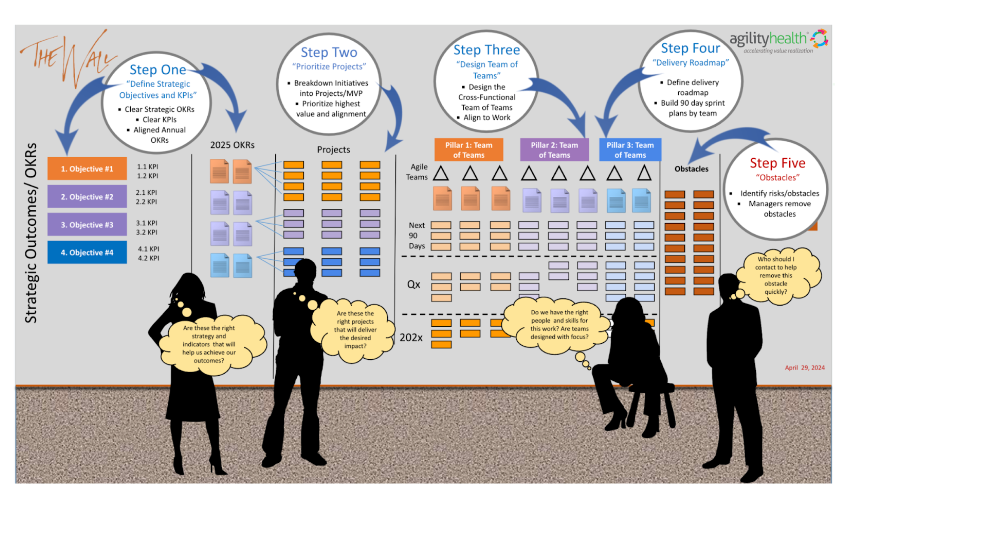
Accelerating Alignment and Visibility: The Enterprise Visibility Room
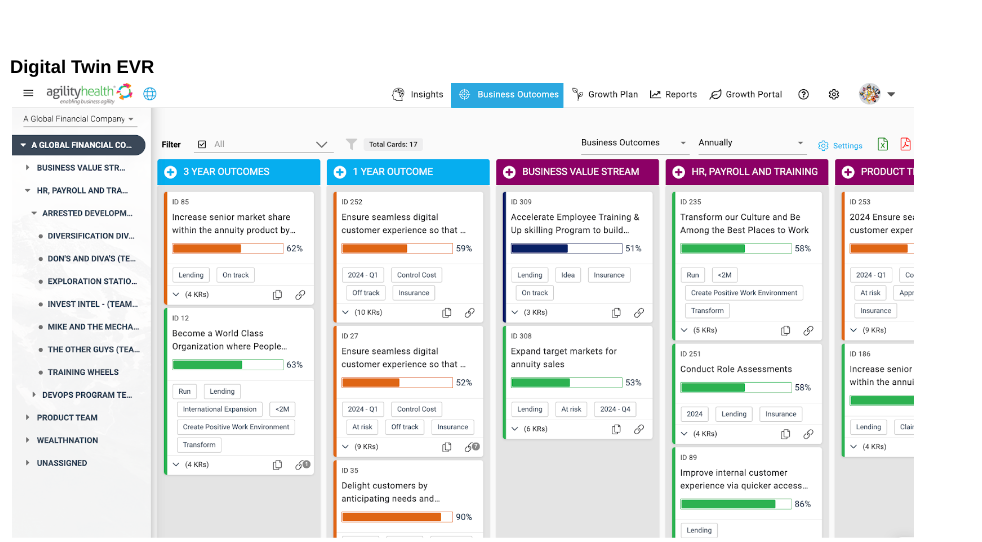
A modern pattern for accelerating alignment is the Enterprise Visibility Room. This visual and open room provides transparency on how strategic outcomes are being aligned and delivered across teams. It showcases performance, upcoming roadmaps, and areas needing help. Our AgilityInsights® platform offers a digital twin of this room, combining physical collaboration with digital tracking.
The monthly ‘Walk the Wall’ exercise accelerates engagement, visibility, and alignment across all levels, fostering collaboration and joint problem-solving.
In Summary
To thrive in today’s competitive market, organizations must create more agile operating models that can accelerate strategy execution and value realization. By adopting cross-functional agile teams, leveraging teams of teams, and using tools like the Enterprise Visibility Room, companies can enhance agility, improve alignment, and drive better business outcomes.
About AgilityInsights®
We’re thought leaders in accelerating strategy and value realization through effective operating models for high-performing teams. Our expertise in outcomes-based planning, team design, measuring progress, and influencing change helps organizations achieve their transformation goals.