How do you improve team maturity?

At AgilityInsights®, we firmly believe that high-performing teams are the most mature. These teams are not just efficient; they understand their roles, collaborate seamlessly, and innovate together. Healthy teams are those that are appropriately sized, with skilled members who know exactly what is expected of them. They can self-organize around the work, and members are T-shaped, allowing each person to contribute to the work in a variety of ways.
But as teams mature, their capacity to deliver value grows exponentially. Transformative leadership development enables teams to break through barriers, unlock creative potential, and become engines of innovation.
In this article, we will explore how to measure team maturity, how to build roadmaps for growth, and the key role of leadership in helping teams develop and thrive.
Why Team Maturity is Crucial for High Performance
Maturity isn’t just a matter of time; it’s about evolving how a team works together. Healthy teams are the foundation for high performance, but high-performing teams go a step further. These teams work together to find creative and innovative solutions to problems, break work into small increments, and deliver value consistently. However, improving team maturity takes time and effort. To help teams develop, it’s essential to start with measurement.
Measurement: The First Step to Growth
To improve team maturity, measuring progress is essential. Consistent and repeatable measurement methods help teams understand their strengths and areas for improvement. This approach needs to be scalable so that it can apply to multiple teams across the organization. Team assessments should cover various competency areas such as team culture, leadership effectiveness, alignment with company goals, and performance metrics
Why Consistent Measurement Matters
When measuring team maturity, it’s essential to assess more than just output. Measuring team happiness, alignment with the company vision, and team performance metrics provides a more holistic view of the team’s maturity. Without this comprehensive approach, you may miss crucial aspects of growth, such as how engaged and motivated the team feels.
One of the key elements of team assessments is defining what “good” looks like. Without a shared definition of “good,” assessments become subjective. For instance, one team member may rate an aspect of team performance as a 7, while another might rate it as a 9. This inconsistency can lead to skewed results. To solve this, ensure you have common definitions and benchmarks for team assessment.
Creating a Safe Space for Self-Assessment
Once you establish the necessary measurement tools, create a safe environment for team members to measure themselves. A neutral facilitator can help ensure psychological safety, encouraging team members to be open and honest about their maturity level. This environment is crucial for obtaining accurate and actionable results. Teams that feel safe in providing feedback will be more likely to engage in the process and make meaningful improvements.
By combining self-assessments with insights from leadership, you can gain a three-dimensional view of your team’s maturity. Rolling up the results to the product line, portfolio, or organizational level gives you a clearer view of performance and reveals patterns across teams, allowing leaders to make better decisions about resource allocation.
Developing a Roadmap for Team Growth
To ensure teams continue to mature, you need a clear roadmap for growth. New teams require different support than mature teams, but all teams should have access to consistent guidance. Providing teams with a growth roadmap that outlines the stages of maturity helps them understand what to expect and how to advance.
What Does a Maturity Roadmap Look Like?
A good maturity roadmap describes the various stages of team growth. It includes what each stage “feels” like to the team, common experiences at that stage, and resources to help teams grow into the next stage. These resources might include training, videos, Agile coaches, or specific role-based resources.
Mature teams can also play a key role in helping newer teams grow. A peer-to-peer mentoring program can be an excellent way for experienced teams to guide and assist teams that are earlier in their development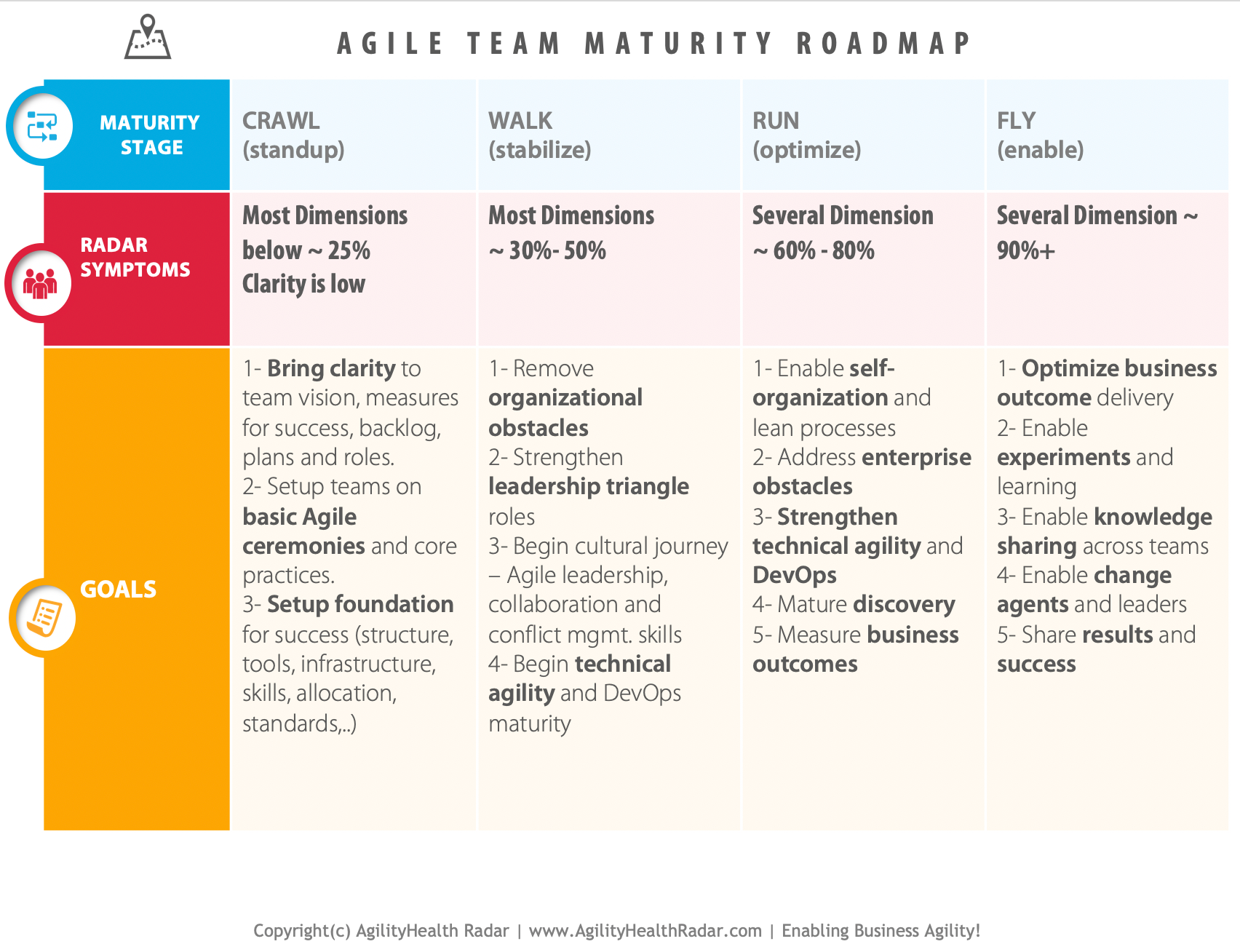
Building an Atmosphere of Continuous Improvement
To truly develop transformative leadership, organizations must foster an environment of continuous improvement. Creating a culture where team members feel safe to make mistakes, ask questions, and seek guidance is key. As teams assess their maturity and performance, the focus should always be on growth, not punishment.
The Role of Leadership in Supporting Growth
Leadership plays a crucial role in removing impediments that prevent team growth. They should be actively engaged in helping teams overcome obstacles and providing the necessary resources to enable growth. Leaders should not only celebrate the progress teams make but also work to remove barriers that slow down progress.
By empowering teams and creating a safe space for growth, organizations set the foundation for sustainable improvement. Engaging leadership and encouraging teams to speak up about their challenges allows everyone to contribute to the solution, fostering a culture of collective success.
How AgilityInsights® Can Help Your Teams Grow
To assist in measuring and improving team health, performance, and maturity, AgilityInsights® Radar Assessments offer a quick and effective solution. These assessments help organizations build actionable plans for growth, enabling self-learning at every level. TeamHealth Radar assessments are a great place to start for any organization looking to gauge their team’s maturity and begin the journey toward high performance.
With AgilityInsights® tools, you can ensure that your teams are not just performing, but growing continuously. Our assessments provide the data needed to build a tailored roadmap for team development that drives both short-term success and long-term organizational health.