How Important Are Leaders to the Health of Agile Teams? (Part 2)

Welcome back! In the first part of this post, we explored how influential Scrum Masters, Product Owners, and Tech Leads are in determining Agile team health. Now, let’s examine the role of functional managers and evaluate whether team confidence serves as a reliable predictor of overall health.
Functional Manager
Even in Agile environments, every team member reports to someone from an HR perspective—typically a functional manager who may not be part of the Agile team. In a mature Agile setting, this manager mentors their direct reports and supports professional growth rather than assigning tasks.
Two common approaches include:
-
Managers by discipline (e.g., development, QA)
-
Cross-functional managers responsible for all Agile team members
So how much influence do functional managers have on Agile team health?
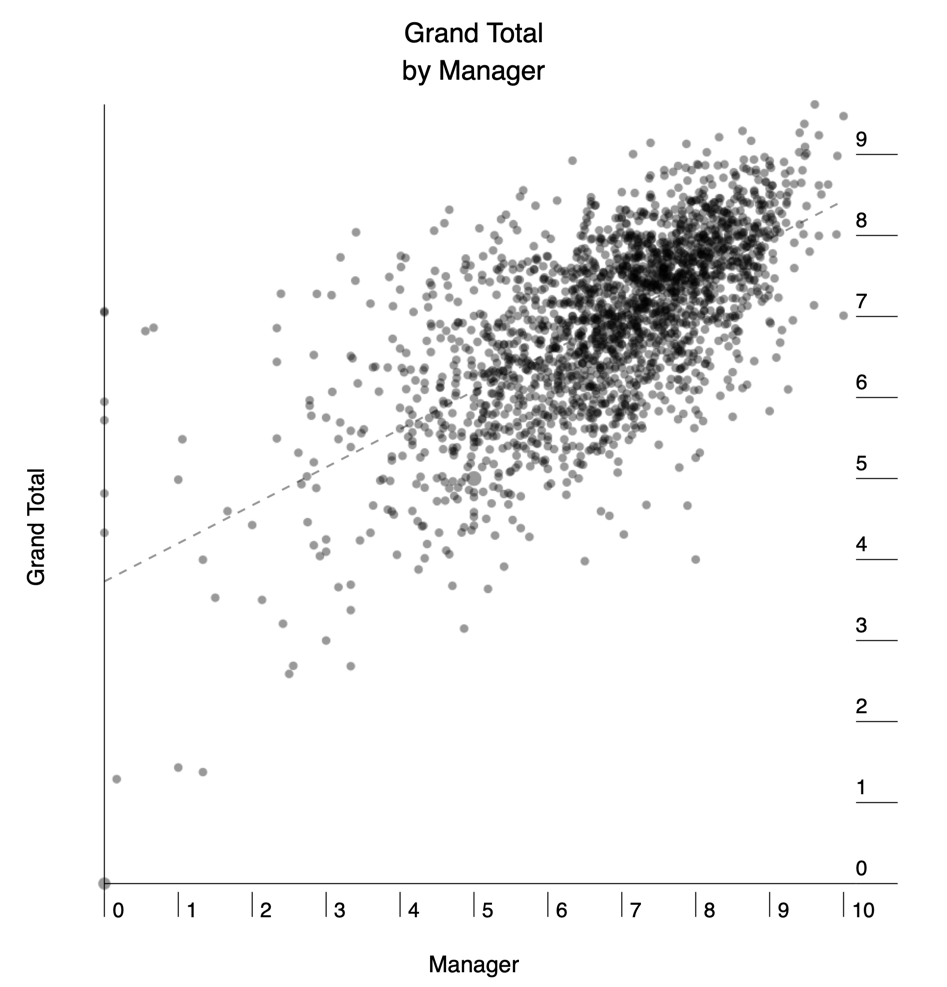
Traditional managers played a central role, but Agile teams are self-organizing.
- Team health depends more on internal dynamics and collaboration than external supervision.
- The data shows a wide variance, suggesting a weak correlation. This makes sense:
Confidence
When researching these relationships, I got curious. Since AgilityInsights also measures people’s confidence in the team, how does that confidence relate to the actual team health? Here are the plots for the team’s overall health and confidence ratings of the Product Owner, the team’s stakeholders as well as the team itself:
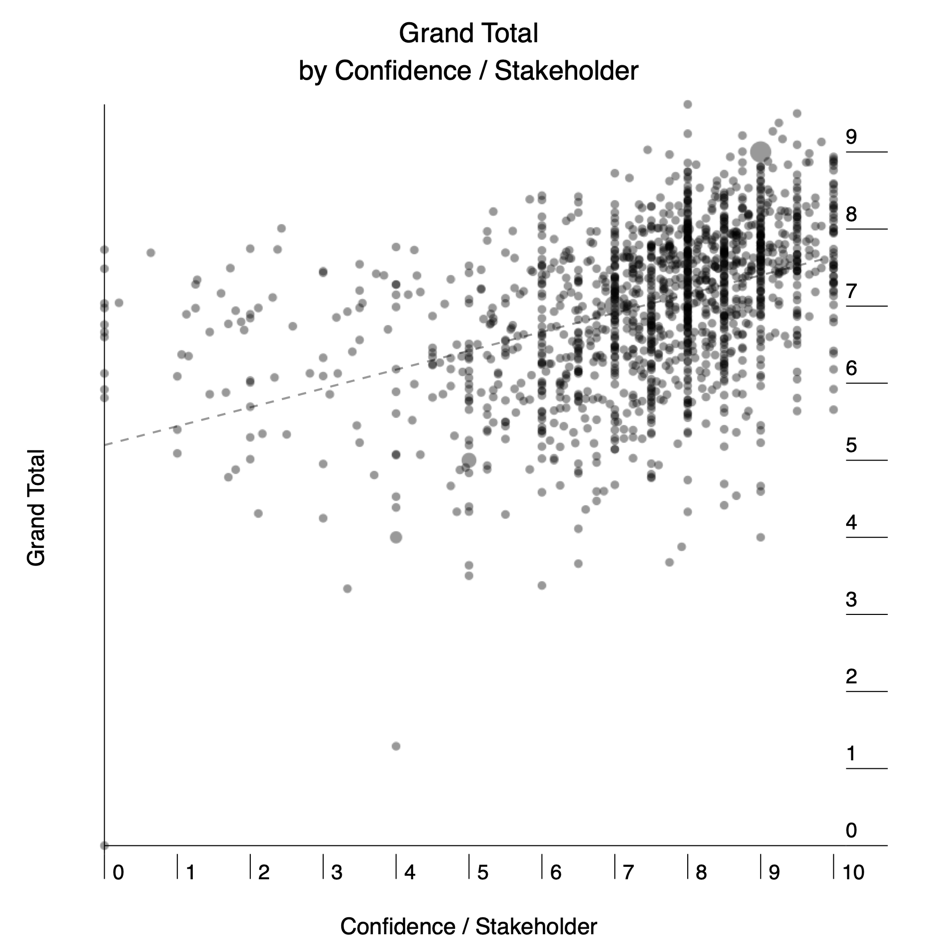
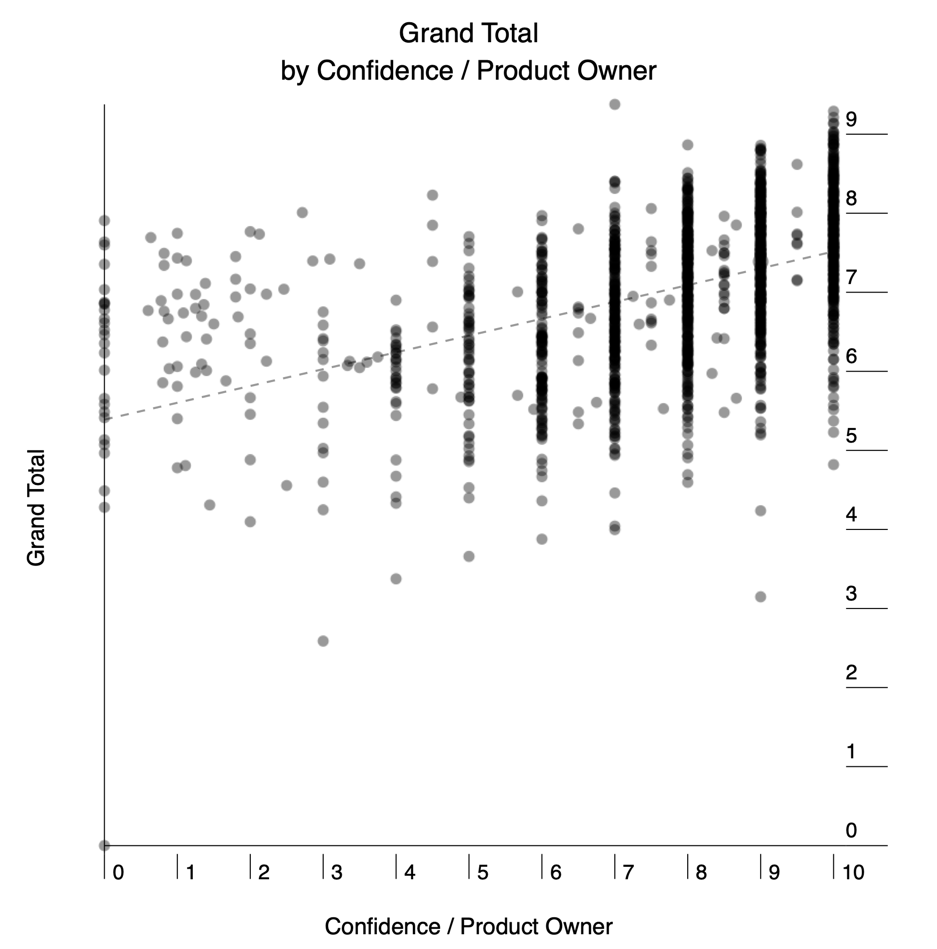
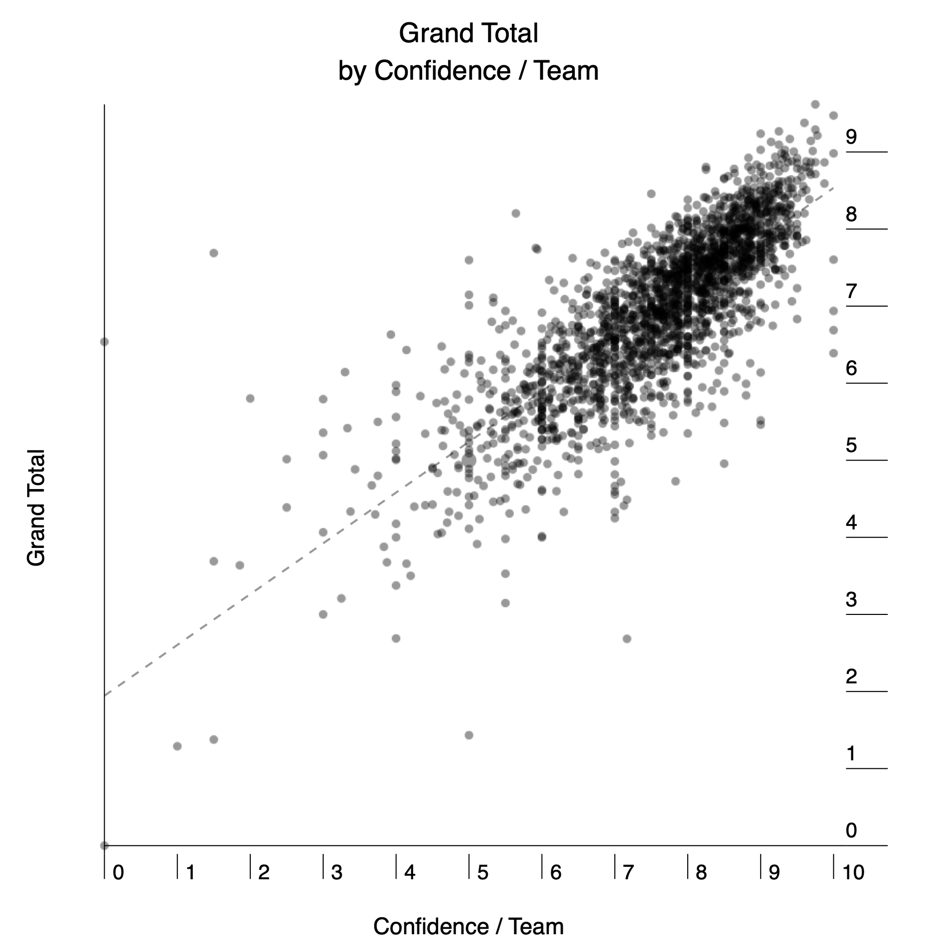
(Note that “bands” appear for PO and stakeholders because the participants’ responses use integers. In many cases, there is only one PO or stakeholder per team, so the averages will also be whole numbers.)
This to me is one of the most fascinating results of my analysis so far: Neither the confidence of the stakeholders nor of the Product Owner are strongly correlated to the team’s overall health! Stakeholders tend to be removed from the team and maybe it’s not surprising that their confidence in the team is not based on a solid understanding of the team.
After all, they don’t interact with the team on a regular basis. However, the PO is an integral part of the team and yet their confidence seems mostly unrelated to the actual team health! On the other hand, it would appear that the team knows itself best. High team confidence clearly relates to team health.
Takeaways
Granted, this has not been a true statistical analysis that holds up to scientific standards. However, I would argue we can still pull some useful takeaways from looking at this extensive data set. What are those?
- When it comes to healthy teams, Scrum Master and Product Owner have a strong influence.
- Tech Leads certainly help, but the team can still be very healthy despite a weaker lead.
- While managers play a more critical role in traditional organizations, their influence is much more muted when it comes to Agile teams.
- Outside stakeholders’ assessment of a team is not a good predictor of the actual health of the team.
- Conversely, teams know themselves best and their own confidence is strongly correlated with health.
- Surprisingly, Product Owner confidence is not a good predictor of actual team health!
As you can see, there is a lot of fascinating data contained in AgilityHealth. It helped us understand how influential different types of leaders really are. I’m hoping to share more of these insights in the future. We are also always looking to incorporate these analyses as features in the platform itself. Stay tuned!
By Rene Rosendahl, AgilityHealth Product Strategist